How to Prevent Control Cabinet Overheating: Cooling Design and Maintenance Guide
A machine may pass commissioning, then begin producing unexplained drive alarms a year later. These failures can lead to unexpected downtime, reduced component lifetime, and unnecessary maintenance costs.The cabinet feels unusually warm, yet the cooling fan is running. Replacing the fan seems obvious, but often does not solve the problem.
Often, the control cabinet cooling system has gradually lost thermal performance. Dust-loaded filters create resistance, air passages become restricted, and deposits form on components. Higher production rates, added modules, or warmer ambient conditions may also increase the load. A rotating fan may be moving too little air.
Reliable electrical cabinet thermal management is therefore not a one-time product selection. Engineers must establish the heat load, design a usable airflow path, match the cooling method to the environment, and preserve that performance throughout the machine lifecycle. This approach prevents recurring control cabinet overheating instead of treating each temperature alarm as an isolated maintenance event.
Why Electrical Cabinets Overheat During Operation
Every powered device releases heat. A PLC rack may contribute a modest load, but servo drives, frequency converters, transformers, industrial computers, power supplies, and communication equipment can produce a substantial combined loss. Use the sum of component losses, not total rated electrical power.
Duty cycle matters. A cabinet may remain cool while idle but approach its thermal limit during a full shift. Drive losses change with load, and components added after commissioning alter the original thermal balance.
Some heat escapes through enclosure surfaces. The amount depends on material, exposed area, temperature difference, and surrounding air movement. Wall-mounted, bayed, sun-exposed, and free-standing cabinets behave differently.
Forced industrial enclosure ventilation removes the remaining heat by exchanging warm internal air with cooler ambient air. For an initial estimate:
Required airflow (m³/h) ≈ 3.0 × internal heat loss (W) ÷ allowable temperature rise (K)
Note:This calculation provides an initial estimation. Final selection should consider filter pressure loss, installation position, enclosure design and environmental conditions.
If the internal heat loss is 400 W and the acceptable inlet-to-outlet temperature rise is 10 K, the theoretical airflow is approximately 120 m³/h. That value does not yet account for filters, outlet grilles, pressure losses, altitude, blocked internal passages, or contamination over time. It is a starting point, not a finished fan specification.
The important quantity is actual airflow through the assembled cabinet. Catalog values often describe free-air flow. Filters, louvers, and narrow passages move the enclosure cooling fan to a different point on its pressure-versus-flow curve, so a nominal 180 m³/h fan may deliver far less.
Cool inlet air should pass heat-producing equipment before leaving. Short-circuit flow directly from inlet to outlet can leave drives in stagnant zones. Cable ducts, dense devices, and mounting plates also create local hot spots.
Why Cooling Fans Lose Performance Over Time
System resistance usually increases around the fan. Filter media captures dust, fibers, oil mist, and process residue. As available openings become smaller, pressure loss rises and airflow falls.
This change is not always obvious. A filter can look only moderately discolored while already imposing significant resistance. Fan noise and vibration may change, but the impeller can continue turning normally. That is why “the fan is running” is not proof that the cabinet is receiving enough cooling.
Consider the 400 W example. At 120 m³/h, the ideal air-temperature rise is about 10 K. If contamination reduces actual flow to 60 m³/h, the same heat load produces roughly twice the air-temperature rise before enclosure surface losses are considered. Equipment near the upper part of the cabinet may experience an even higher local temperature.
Dust on heat sinks, vents, and circuit boards reduces local heat transfer. Oil-bearing residue forms an insulating layer, while moisture-retaining deposits increase corrosion and tracking risk. Neglected ventilation creates both thermal and electrical reliability problems.
Temperature trends help expose gradual deterioration. Measure cabinet-to-ambient temperature difference under a repeatable machine load rather than comparing unrelated spot readings. If that difference rises while the heat load remains similar, investigate the filter, airflow path, fan direction, internal circulation, and recent cabinet modifications.
Filter Maintenance and IP Protection
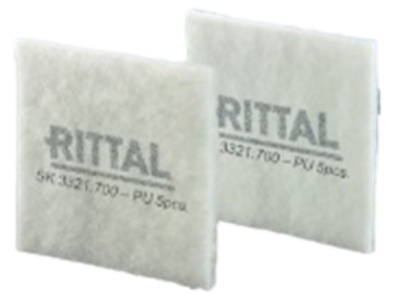
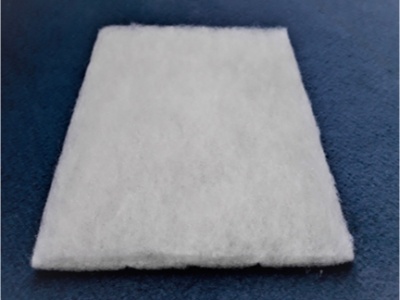
The filter is part of the protection system. A coarse, low-resistance mat may admit unwanted particles; excessive resistance can reduce cooling below the requirement. Filter characteristics and fan performance must be evaluated together.
For an IP54 enclosure, the first digit means the enclosure is protected against dust ingress at a level that prevents harmful deposits. The second digit indicates protection against splashing water. IP55 retains the dust-protected classification and provides protection against water jets. The correct rating depends on the installation environment, cleaning practice, applicable standards, and equipment risk assessment.
The completed assembly determines protection. Housings, seals, cut-outs, doors, cable entries, and orientation all contribute. An IP-rated component does not automatically give a modified cabinet the same rating.
Removing a loaded filter can temporarily increase airflow, but it also opens a direct path for dust and moisture. The immediate temperature reduction may conceal a growing contamination problem inside the cabinet. Running without the specified filter, using a poorly fitting replacement, or leaving a grille unsecured can compromise protection reliability and may invalidate the intended enclosure rating.
Restore designed airflow with approved media, intact seals, and seated covers. Where appropriate, a filtered intake fan can maintain slight positive pressure to discourage unfiltered ingress. The exhaust must still avoid excessive backpressure.
Common Mistakes in Control Cabinet Thermal Design
Mistake 1: Installing fans but ignoring filter replacement
A spinning impeller confirms motion, not cooling capacity. Treat the filter as a consumable with an equipment record, approved part specification, and accessible replacement method. If technicians must shut down a difficult process or remove obstructing equipment to reach the mat, maintenance will often be postponed; service access should be designed into the panel.
Mistake 2: Selecting capacity without considering the environment
Catalog airflow rarely represents a contaminated, assembled installation. Dust, fiber, machining mist, and pollen load filters differently. When ambient air equals or exceeds the target cabinet temperature, ventilation cannot provide sensible cooling, regardless of fan size.
Mistake 3: Waiting for an alarm
An overtemperature alarm is a protection layer, not a maintenance trigger. By the time it operates, electrolytic capacitors, displays, power electronics, and batteries may have experienced months of elevated temperature. Trend temperature and airflow indicators so intervention occurs before production is affected. Alarm testing should still be part of planned electrical cabinet cooling system maintenance.
How Engineers Should Maintain Cooling Performance
At commissioning, record ambient temperature, critical component temperatures, machine load, fan state, and airflow or differential pressure with clean filters. Document the filter specification and photograph its correct installation.
For a dusty environment, a three-to-four-month inspection or replacement cycle is a reasonable starting point. In cleaner environments, begin with approximately six months. These are planning values rather than universal rules. Shorten or extend the interval using observed loading, temperature trends, operating hours, humidity, oil mist, seasonal changes, washdown exposure, and filter-manufacturer guidance.
A practical maintenance check should cover:
- Inspect the inlet and outlet filters for blockage, damage, oil loading, and poor seating.
- Confirm fan rotation, airflow direction, abnormal noise, and unobstructed grilles.
- Compare temperature and airflow with the clean-system commissioning baseline.
- Replace damaged or heavily loaded filters with the specified media.
- Check door gaskets, fan-housing seals, cable entries, and covers.
- Verify thermostats, sensors, fan controllers, and high-temperature alarms.
- Record the result, corrective action, and next inspection date.
Follow isolation, lockout/tagout, and electrical safety requirements. Not every filter can be washed or cleaned with compressed air; media may be damaged or retain oily deposits. Use the approved method and replace mats that cannot restore acceptable airflow.
Critical cabinets benefit from condition monitoring. Differential-pressure switches, airflow sensors, fan-speed feedback, and temperature alarms can identify deterioration between planned inspections. A rising cabinet-to-ambient temperature difference at comparable production load is an especially useful early warning.
Maintenance records should feed back into design. If filters consistently load within six weeks, repeatedly shortening the replacement interval may not be the best lifecycle answer. The engineering team should investigate a larger filter area, a different approved filter system, process-level dust extraction, relocation of the air inlet, or a closed-loop cooling method.
When Fan Cooling Is Not Enough
Fan ventilation is usually the simplest option when ambient air is clean enough, cooler than the desired internal temperature, and capable of removing the calculated heat load. It is an open-loop system: ambient air and its humidity enter the cabinet. That tradeoff must be acceptable.
Consider a closed-loop enclosure air conditioner when internal heat load is high, ambient temperature approaches or exceeds the cabinet setpoint, or the enclosure must remain isolated from contaminated air. Selection must account for component heat loss, solar gain, enclosure surface heat transfer, ambient design temperature, required internal temperature, mounting arrangement, and derating conditions. Condensate management and maintenance access must also be planned.
Thermoelectric cooling is useful for compact enclosures, moderate localized heat loads, low-vibration applications, and designs where a compressor-free solution is preferred. Its available capacity and efficiency must be checked carefully against the required temperature difference.
Higher-capacity cooling, air-to-air heat exchangers, or liquid-based solutions may suit dense drive systems, outdoor installations, or sensitive electronics. Also reduce heat at source by improving spacing and airflow, shading outdoor cabinets, or moving suitable heat sinks outside the protected volume.
How Suwi Automation Supports Enclosure Thermal Management
The correct cooling method follows the relationship between heat load, ambient conditions, contamination, protection requirements, and available installation space.
Fan cooling is usually appropriate when ambient air is clean enough to enter the cabinet, ambient temperature remains below the required internal temperature, and the calculated heat load can be removed with practical airflow. It is simple and economical, but it is an open-loop solution that brings ambient humidity and some contamination into the enclosure.
An enclosure air conditioner is preferable when ambient temperature is high, heat load is substantial, or the cabinet must remain isolated from contaminated air. It provides closed-loop internal circulation and can maintain a cabinet temperature below ambient within its rated operating limits. Selection should include worst-case ambient temperature, internal losses, solar gain, enclosure surface behavior, mounting arrangement, condensate management, and maintenance access.
Thermoelectric cooling suits compact cabinets, localized moderate loads, and applications that benefit from a compressor-free device. Available capacity and efficiency depend strongly on the required temperature difference, so it should not be treated as a universal replacement for higher-capacity air conditioning.
Air-to-air heat exchangers, liquid cooling, or higher-capacity methods suit some applications. Also reduce the load by improving spacing, separating high-loss equipment, shading outdoor cabinets, or moving suitable heat sinks outside the protected volume.
| Application condition |
Typical starting option |
| Clean air, ambient below cabinet target, moderate heat load |
Filtered fan cooling |
| Dirty air or cabinet target below ambient |
Enclosure air conditioner |
| Small enclosure with moderate localized load |
Thermoelectric cooler |
| High-density or unusually high heat load |
Engineered high-capacity or liquid solution |
This table is a screening tool, not a substitute for a thermal calculation.
Engineering Support from Suwi Automation
Suwi Automation helps engineers, panel builders, machine manufacturers, and integrators evaluate electrical enclosure cooling and broader industrial enclosure cooling solutions from application data: internal heat loss, enclosure size, ambient and target temperatures, contamination, humidity, IP requirement, mounting orientation, voltage, and service space.
This engineering review helps determine whether industrial enclosure ventilation is sufficient or whether closed-loop or localized cooling is justified. It also identifies practical requirements such as filter access, airflow layout, controls, alarms, and compatible thermal management products.
A documented calculation and environmental specification make quotations easier to compare, reduce sizing risk, and give maintenance teams the baseline needed after commissioning.
The goal is not to specify the largest available unit. It is to establish a control cabinet cooling system that maintains the required temperature, protects the enclosure environment, uses energy responsibly, and remains serviceable throughout the equipment lifecycle.
FAQ
Q1: Why does my electrical cabinet overheat even with a cooling fan installed?
A: The fan may be rotating while actual airflow is low because the filter is clogged, the outlet is undersized, the airflow path is blocked, or the fan was selected using its free-air rating. High ambient temperature, added heat load, incorrect fan direction, and internal recirculation can also cause overheating.
Q2: How often should electrical enclosure filters be replaced?
A: As a starting point, replace them every three to four months in dusty environments and about every six months in cleaner areas. Inspect more frequently and adjust the interval using airflow, filter condition, operating hours, temperature trends, and the filter supplier’s instructions.
Q3: Does a cleaner filter improve cabinet cooling performance?
A: Yes, when filter loading is causing excessive pressure loss. A clean, correctly specified mat allows the fan to operate closer to its intended airflow, which lowers the temperature rise for a given heat load. It also maintains contamination protection that would be lost if the filter were removed.
Q4: What IP rating is suitable for industrial control cabinets?
A: The correct rating depends on dust, water, cleaning practices, location, and applicable standards. IP54 is common where dust and splashing water are concerns; IP55 provides greater water-jet protection. The complete installed enclosure—not only the fan or filter—must satisfy the required rating.
Q5: When should I use an enclosure air conditioner instead of a fan?
A: Use a closed-loop air conditioner when ambient air is too hot or contaminated for ventilation, the required cabinet temperature is below ambient, or the heat load exceeds practical fan cooling. Confirm capacity with a thermal calculation under worst-case operating and environmental conditions.