As an authorized Rittal distributor, we at SuwiAuto routinely consult with electrical engineers and procurement managers regarding thermal management layout design. A recurring dilemma in enclosure climate control planning is a clear-to-see fork in the road: Should we spec the time-tested, cost-effective traditional Blue e cooling units, or invest upfront in the next-generation intelligent Blue e+ variable-speed systems?
From our distribution and deployment experience across hundreds of mid-to-large-scale industrial automation rollouts, we know that there is no universally "superior" product—only the unit that aligns with your specific ambient environment, load profiles, and asset strategies. Over-specifying leads to wasted CAPEX on digital redundancies, while under-specifying causes premature component degradation and thermal-induced downtime.
To assist your engineering team in making an optimal commercial and technical determination, this guide leverages our distribution insights to break down Rittal's two benchmark series through the lens of Total Cost of Ownership (TCO).
Blue e
For production facilities maintaining stable ambient temperatures and relatively constant thermal load profiles, the Rittal Blue e line remains the benchmark for immediate Return on Investment (ROI). Engineered with a pragmatic mechanical architecture, blue e series prioritizes dependable, plug-and-play climate control stability.
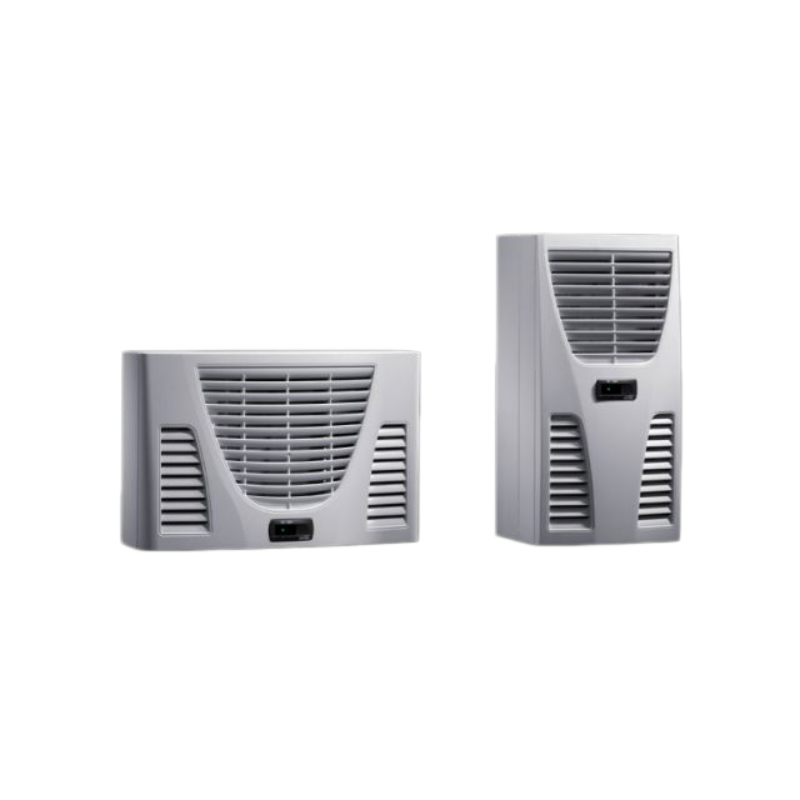
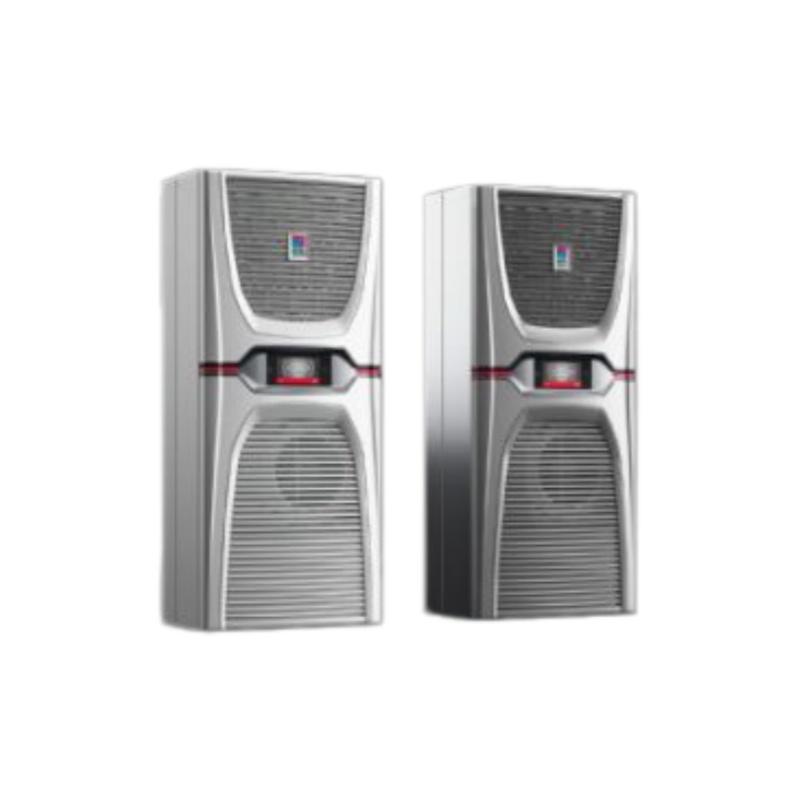
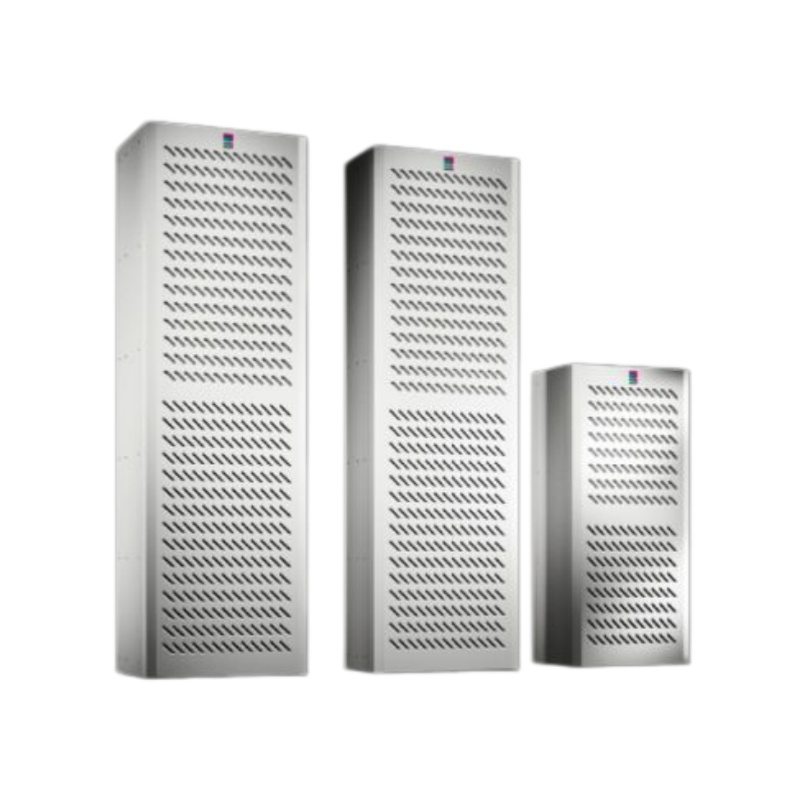
As an authorized channel partner, SuwiAuto maintains rolling inventory of the three primary Blue e form factors:
The heart of Rittal’s Blue e line includes:
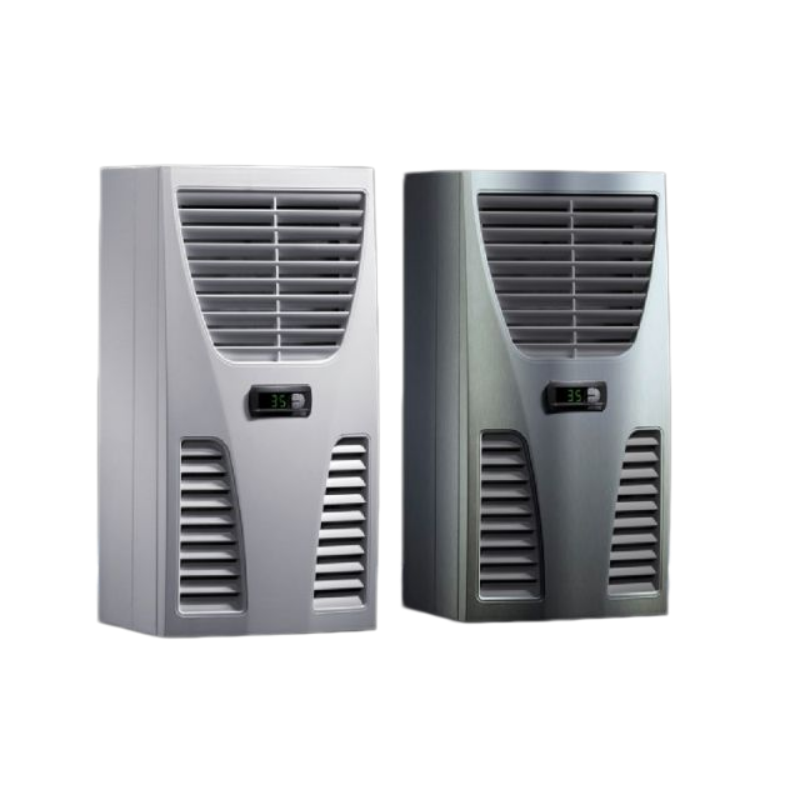
- TopTherm air conditioners are the staple of Rittal’s Blue e line. These units combine high output with superior energy efficiency and temperature stability controls to not only reduce your energy consumption and costs, but also prolong the life of your switchgear and electronic cabinets. The TopTherm line puts durability and reliability at the forefront with nano-coated condenser coils and integrated condensate evaporators to resist corrosion and reduce maintenance time and cost while maintaining reliable cooling capacity. Available in both wallmount and roofmount and with multiple mounting position capacity and the option for filterless operation, TopTherm provides the flexibility and modularity necessary to remain competitive and cost-conscious.
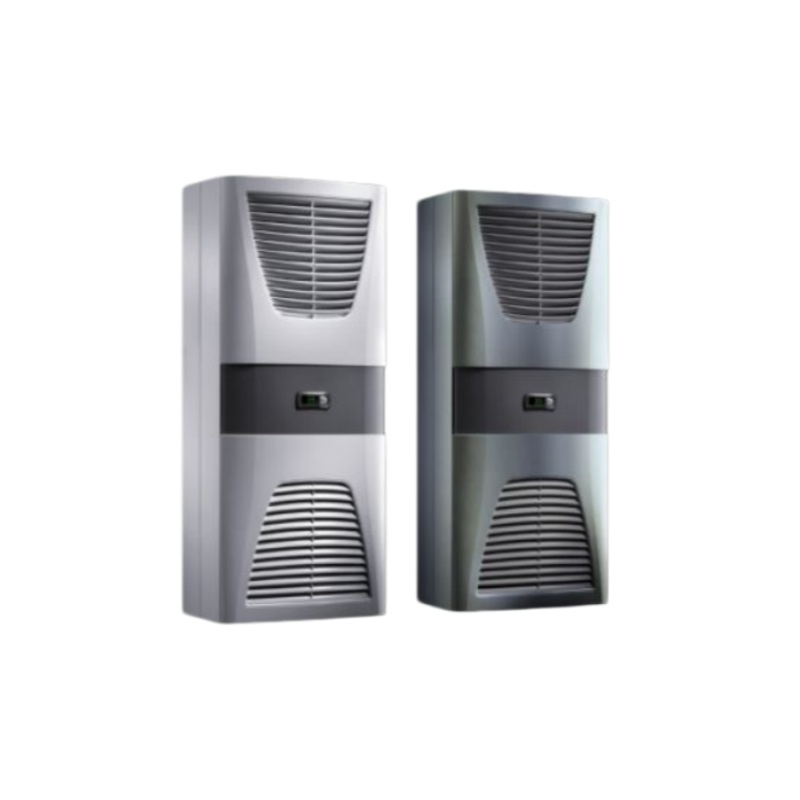
- Wallmounted air conditioners provide the same exceptional level of climate control and cooling capabilities as the TopTherm product but with an emphasis on outdoor applications or those with harsh climate considerations or elements. This line of cooling units is the industry standard for indoor or outdoor enclosures where water is a primary concern, such as wastewater facilities, transportation and toll booths, outdoor kiosks, and food and beverage production facilities. In addition, the use of nanotechnology helps resist filiform corrosion on condenser coils which offers greater energy efficiency. Coated condenser coils do not impact the cooling capacity of the unit and in most cases can be operated without a filter, further reducing maintenance-related downtime.
- Blue e Chillers are designed for specific or targeted cooling applications where climate control is still a top priority but without an emphasis on cooling an entire network or system of switchgear panels or cabinets. In essence, Rittal’s Blue e Chiller acts as a spotlight where high-efficiency and controlled cooling is concentrated or directed to a specific location or element. Designed for the ultimate plug-and-play scenario, this chiller comes fully-wired ready, equipped with standardized water connections, and is available in two enclosure sizes for four cooling capacities.
Blue e benefits:
- Energy-efficient rotary compressor technology
- Speed-controlled fans for reduced energy consumption
- Digital temperature controller for precise regulation
- Integrated condensate evaporation system
- Reliable operation in industrial environments
Blue e application:
- Standard control cabinets in manufacturing
- Stable operating environments
- Applications with consistent heat loads
- Budget-sensitive industrial projects
In short, Blue e is a reliable workhorse—efficient, practical, and cost-effective.
Blue e +
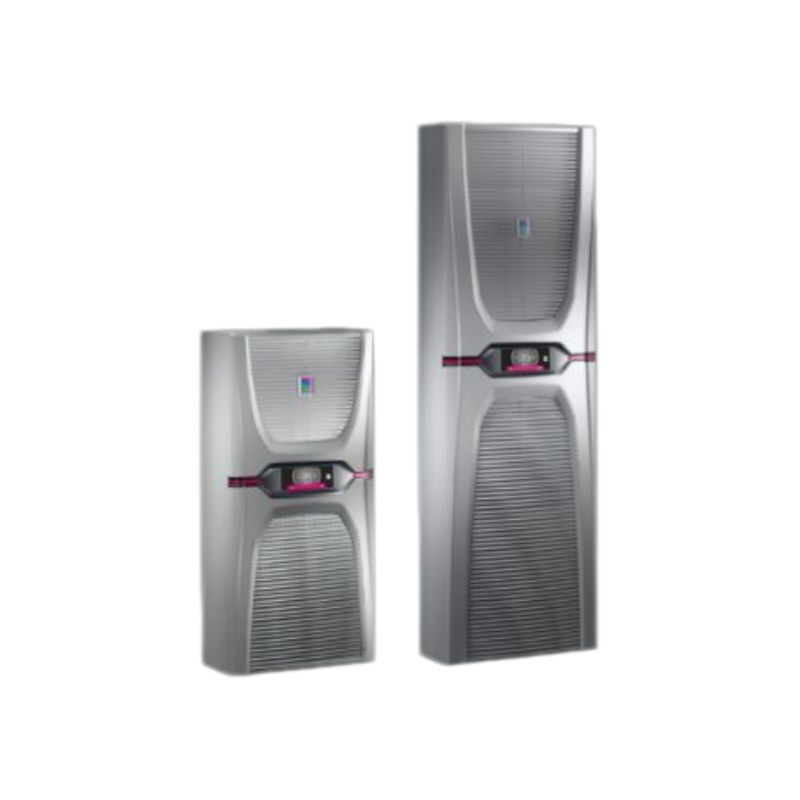
The Rittal Blue e+ series represents a technological paradigm shift in industrial climate control. Moving away from standard fixed-speed compression, it utilizes a digitalized, automated micro-climate framework designed to maximize OPEX (Operating Expenditure) efficiency across high-density, variant-rich automated production systems.
For advanced manufacturing plants, Tier-1 automotive lines, and smart factories, Blue e+ delivers three distinct engineering advantages:
Blue e+ also provides a variety of game-changing features, including:
-
- Hybrid cooling that relies on two parallel cooling circuits working to circulate air throughout the enclosure. The integral heat pipe dissipates heat from the enclosure as soon as the ambient temperature falls below a specified setpoint, providing passive climatization. This inverter technology provides optimal and adequate cooling output at any time with increased energy efficiency compared with more conventional cooling methods, along with increases in the lifespan of the enclosure, the enclosed components, and the cooling unit itself.
- Global applications via multi-voltage capability to connect to all standard power grids worldwide. Possible input voltages range from 110 V (single phase) to 480 V (three-phase) at grid frequencies of 50 or 60 Hz, which means a considerable reduction in the number of device variants, but also to a greater simplification of spare parts procurement resulting in enhanced supply chain logistics. The ability to operate around the globe regardless of specific voltage standards means Blue e+ puts companies in a position to rapidly and effectively compete in such a marketplace where streamlining workflows and optimizing efficiency are the name of the game.
- Technological integrations that put more power than ever before in the hands of those on the production room floor whose job it is to ensure the right level of cooling and control takes place at the right time for the right application. Other integrations within the Blue e+ series include a touch-screen display, multi-lingual system messages, and standardized communication interfaces to ensure easy integration in a production plant’s control systems. In addition, remote and mobile monitoring, data transfer and sharing, and real-time insights to avoid breakdowns and/or maintenance costs increase cross-organization communication and collaboration for a more productive and data-driven end-to-end experience
Blue e + benefits :
- Hybrid cooling technology
- Extremely high energy efficiency (up to ~75% energy savings compared to older systems)
- Wide voltage compatibility for global deployment
- Smart IoT connectivity for monitoring and diagnostics
- Variable-speed components for dynamic load adaptation
- Precise temperature control for sensitive electronics
Blue e + application :
- Data centers and IT infrastructure cabinets
- High-load industrial environments
- Facilities with 24/7 operation
- Companies with strong sustainability targets
- Global operations needing voltage flexibility and remote monitoring
Blue e+ is a future-focused solution designed for performance, intelligence, and long-term savings.
-
| Evaluation Metrics |
Blue e Series (The Reliable Workhorse) |
Blue e+ Series (The Intelligent Standard) |
| Upfront CAPEX |
Low to Moderate. Highly budget-friendly initial purchase cost. Ideal for projects with strict upfront capital limits. |
Premium Price Tier. Higher initial procurement investment due to advanced hybrid technology and smart components. |
| Operational OPEX |
Baseline Consumption. Standard energy costs dictated by traditional fixed-speed on/off compressor cycling. |
Ultra-Low Consumption. Delivers up to 75% energy savings by combining passive heat pipes with variable-speed speed-controlled compressors. |
| Voltage Adaptability |
Region-Specific. Requires different model variants to match local power grids (e.g., 230V 1~ vs. 400V 3~). Increases SKU tracking. |
Global Multi-Voltage. One unit fits all standard worldwide grids natively (110V to 480V, 50/60Hz). Simplifies global OEM supply chains. |
| IoT & Industry 4.0 |
Optional/Retrofit. Requires external Rittal IoT adapters and additional wiring to pull data into factory automation networks. |
Native Integration. Built-in touchscreen, smart diagnostics, and standardized communication protocols for real-time remote monitoring. |
| Thermal Load Fit |
Constant Loads. Best for manufacturing floors with a stable baseline ambient temperature and steady internal heat profiles. |
Dynamic/Fluctuating Loads. Excels in high-density automated cells, Tier-1 lines, and climates with severe diurnal temperature shifts. |
| Typical Payback |
Immediate ROI on the procurement invoice, but subject to cumulative lifecycle energy and maintenance costs. |
Typically 12 to 24 months in 24/7 high-tariff regions, driven by aggressive, compounding OPEX reductions. |
The right choice for you?
In order to understand which line of innovative, dynamic cooling and climate systems makes sense for you, you first have to understand what you need to support your production architecture and then you can determine which cooling system supports those needs.
that is especially true for Rittal’s Blue e and Blue e+ cooling units, as modifications and retrofitting can certainly be made to the Blue e line via series of IoT adapters to bring the standard Blue e line closer to the automation levels and digitization levels of Blue e+.
Choosing between Rittal Blue e and Blue e+ is not about which one is universally better—it’s about matching technology to application.
- Blue e = reliable, cost-effective, standard industrial cooling
- Blue e+ = advanced, energy-optimized, future-ready solution
If your priority is initial cost and simplicity, Blue e is a strong choice.
If your priority is energy efficiency, smart control, and long-term savings, Blue e+ clearly stands out.
The right decision depends on how your systems operate today—and how you want them to perform in the future.
Authorized Technical Support & Thermal Calculations via SuwiAuto
As an authorized Rittal channel partner, SuwiAuto does not rely on subjective estimates or rule-of-thumb thermal guesswork. Our engineering team utilizes the proprietary Rittal Therm sizing software to calculate your precise heat dissipation requirements based on physical enclosure dimensions, mounting arrangements (wall-mounted vs. roof-mounted), minimum/maximum ambient temperature profiles, and total internal component power loss (Watts).
We maintain active stocking levels of core Blue e and Blue e+ configurations for rapid deployment.
To request standard thermal calculation sheets, official factory datasheets, step files, or project-specific quotation matrices, please contact the SuwiAuto.