The old stone industry has been perceived for a long time as a stone-pounding business with all-embracing dust, spraying of water mist and deafening noise. As global manufacturing is constantly moving towards other regions like Southeast Asia, and the market demand for high-precision customized stone processing products (including sintered stone and high-quality marble five-axis carving) continues to grow, the automation of stone processing has become a prerequisite and key point for survival in business.
In the eyes of the stone machinery manufacturers (OEMs) and stone processing plants, one thing is often neglected but extremely important – the invisible part, which is the industrial enclosure (electrical control cabinet) – is the one that determines the safety, stability, longevity, full capacity and optimization of the whole production line.
Based on the 《Leading Petrochemical with Intelligence, Creating the Future with Quality》 — Rittal Petrochemical Industry Digitalization & Intelligence Practice White Paper” [1] jointly released by CONTROL ENGINEERING China and Rittal, let's explore the profound impact and influence that industrial enclosures have on the upgrading of stone processing equipment.
1. Breaking Through Harsh Environments:
High-Protection Enclosures Serve as "Body Armor" for Stone Plants
The greatest enemies facing stone processing equipment upgrades are the pervasive marble/granite dust and cutting coolant mist present throughout the workshops.
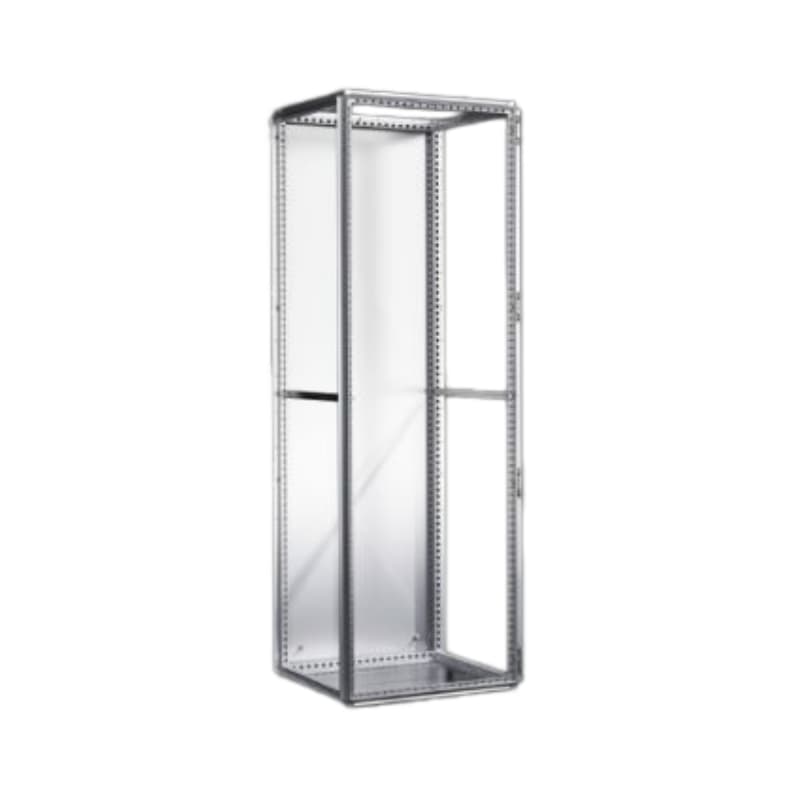
The more traditional stone plants primarily employ simple sheet metal enclosures. During dry cutting, a fine stone dust will accumulate on the circuit boards of the inverter or PLCs, under the catalysis of humid water mist, it will easily cause short circuit or burn out. The IEC standard specifies that high-density conductive or non-conductive dust is a major cause that can drastically reduce the Mean Time Between Failures (MTBF) of industrial controllers [2].
In real chemical environments on the seashore where chemical spray and high humidity are present, the operators have to protect the critical assets using high-quality surface treatment and sealing design, notes Rittal in its petrochemical white paper [1]. Rittal's AX/KX series and VX25 enclosure systems use a unique three-stage surface treatment process (nanoceramic pre-treatment, electrophoretic dip-primer, and powder coating) that enables Rittal's explosion-proof and field-side enclosures to attain a protection level of up to IP66 [1][3].
As an asymmetric strategy, introducing anti-corrosion and protection standards for the petrochemical industry to the stone industry is effective. In Southeast Asia (including Indonesia, Vietnam, Thailand, etc.) humid environments, an ISO 12944 C5 grade corrosion protection certification [3] for a PLC control cabinet can double the life of equipment exposed to water mist year round, cutting down on unplanned downtime by more than 85%.
Don't let dust and moisture eat into your profits. Click here to download the Rittal AX/KX Heavy-Duty Enclosure Brochure
2. Eliminating "High-Temperature Overheating":
Smart Climate Control Solves Inverter Heat Dissipation Challenges
Under the trend of smart manufacturing, modern stone processing heavily relies on high-power servo drives and spindle inverters to achieve millimeter-level cutting precision. These high-energy-consuming components generate massive heat during operation.
According to the classic law of electronics (which is based on the Arrhenius equation principle), the life span of electronic components inside an electrical cabinet is reduced by 50% for every 10°C increase in temperature [4]. Don't forget that the temperatures in overseas markets like Southeast Asia are high and continue year-round, at 30 to 40 °C. When operators use only ordinary fans for the ventilation, the fans are not effective in cooling the cabinet and directly suck the dust air around the cabinet into the cabinet.
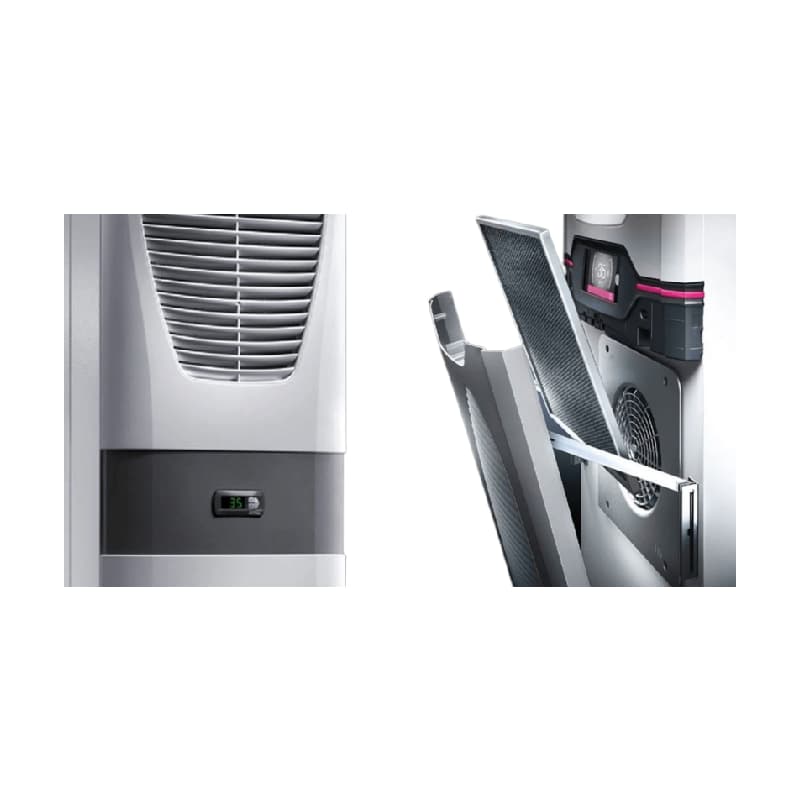
The white paper illustrates the use of Rittal's next-generation energy-saving cooling units/climate control systems for industrial use, the Blue e+ [1]. This system is based on the dual-circuit system that includes a heat pipe and a speed-regulated compressor, which dynamically changes the amount of cooling according to the heat load of the cabinet [4].
Conclusions and recommendations: Stone machinery OEMs should make a firm move to the future, abandon the traditional "fan cooling" and adopt a more comprehensive approach of "high protection + smart enclosure climate control. By maintaining the internal cabinet temperature at 35°C (the optimum temperature range for electronic components), there are no shutdowns due to the overheating of the heat dissipation of the inverter. Moreover, this method can consume up to 75% less energy for climate control [1][4], which directly impacts the Southeast Asian customers' pain point of high electricity cost.
3. Digital Value Chain:
Accelerating the "Fast Track" from Design to Overseas Delivery
For automation system integrators (SIs) and machinery manufacturers in Southeast Asia, the shortage of technical personnel and long delivery cycles for overseas projects represent commonly faced pain points.
Manual Wiring & Engineering Cut Outs: Manual wiring and secondary engineering cutouts are very dependent on traditional methods of control cabinet design and manual drawings. This process results in low efficiency, high error rate and inability to fulfil the speedy commissioning criteria of overseas projects.
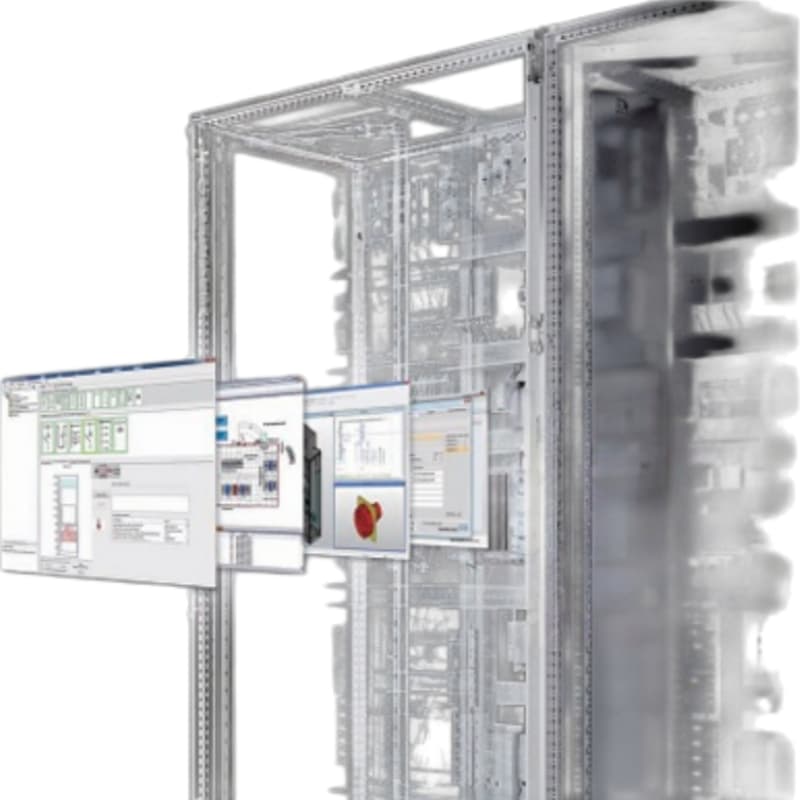
The white paper recommends that the true digital transformation requires "software + hardware" integration [1]. In the process, EPLAN 3D engineering design software is combined with Rittal's RiPanel digital configuration tool [1][5] to enable the designer to build a complete digital twin of the enclosure, which follows exactly a 25 mm pitch pattern.
The processing data extracted from the 3D model can be transferred directly to automated centres for the enclosure modification (perforex), where they can be cut and drilled accurately, avoiding human errors. This digital value chain solution can boost the design, wiring and assembly efficiency of equipment by over 30%
4. Edge Computing and Smart O&M:
The "Digital Brain" of Future Stone Plants
As the Industrial Internet of Things (IIoT) gains ground across process and manufacturing industries, industrial enclosures are evolving from simple "sheet metal shells" into edge computing nodes on the workshop floor.
Smart Monitoring: Modern smart enclosures support the real-time upload of internal temperature, humidity, energy consumption, and inverter status via IoT interfaces.
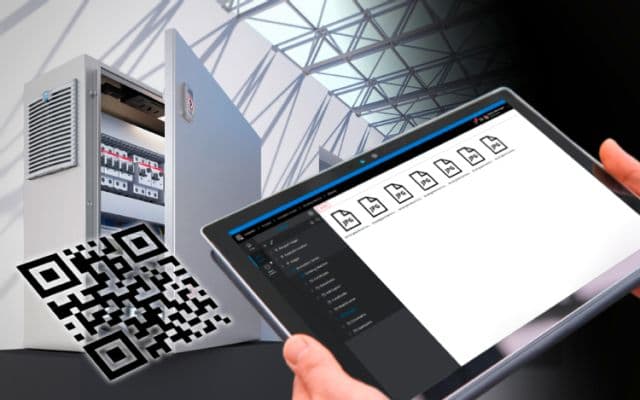
Cloud Collaboration and Digital Circuit Diagrams: Combining the cloud-based paperless operation and maintenance tools mentioned in the white paper (such as the ePOCKET digital wiring diagram pocket) [1], on-site maintenance personnel or domestic technical teams only need to scan a QR code on the enclosure to access the latest complete set of electrical schematics in the cloud.
Autonomous Suggestion: Many stone plants in the Southeast Asian region don't have senior electrical engineers. Domestic distributors or OEMs can remotely deliver predictive maintenance and quick fault diagnosis for a stone plant in Indonesia or Thailand using the smart enclosures' remote O&M features. Service exportation and digitalisation create a high stickiness after-sales barrier.
Ready to safeguard your stone automation equipment in overseas markets?
Whether you need technical consulting, compliance certification support for Southeast Asia, or bulk pricing, we are here to help.
5.Conclusion and Business Advice
The enclosure is not a mere accessory; it is the foundational bedrock for the stone industry to march toward smart manufacturing.
For promoters of stone processing automation focusing on overseas markets—especially in Southeast Asia—when facing fierce market competition, traditional tactics focus on price competition, whereas digital tactics focus on the Total Cost of Ownership (TCO) across the entire lifecycle.
By introducing top-tier industrial enclosure solutions possessing high protection, smart climate control, and digital genes, distributors can help stone machinery OEMs establish a "high-end and stable" brand image in international markets. Concurrently, these solutions practically help end-users solve the pain points of harsh workshop environments and high downtime rates. In the wave of digital transformation, whoever takes the lead in upgrading the "control hub" will secure the initiative in this industry restructuring.
We are committed to providing the highest standard of enclosures, climate control systems, and automation upgrade solutions for global stone processing and heavy industry customers.
References:
[1] Rittal & CONTROL ENGINEERING China. (2026). “Leading Petrochemical with Intelligence, Creating the Future with Quality — Rittal Petrochemical Industry Digitalization & Intelligence Practice White Paper”.
[2] IEC 60529. Degrees of protection provided by enclosures (IP Code). International Electrotechnical Commission standard on protection degrees provided by electrical equipment enclosures against dust and liquid ingress.
[3] ISO 12944. Paints and varnishes — Corrosion protection of steel structures by protective paint systems. International Organization for Standardization standard on corrosion protection of steel structures by protective paint systems (C5 high corrosion environment certification).
[4] Rittal GmbH & Co. KG. (2022). White Paper: How to Achieve the Perfect Climate Inside Your Enclosure. Rittal technical white paper on perfect internal climate control and energy consumption reduction for enclosures.
[5] Rittal GmbH & Co. KG. (2023). White Paper: Practical Benefits of Modular Industrial Enclosures and Digital Value Chain. Rittal research white paper on the efficiency benefits of modular industrial enclosures and the digital value chain