Before selecting an enclosure, the first question should be: where will this cabinet be used?
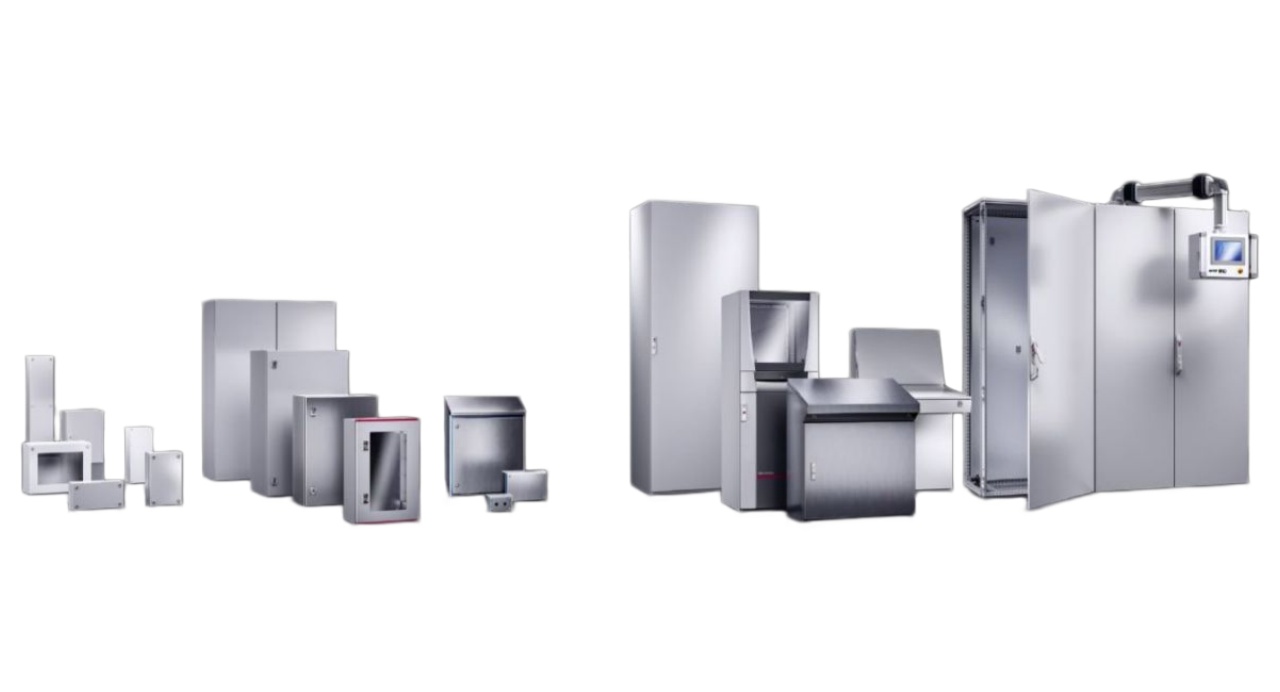
For small control panels, machine-side control boxes and local electrical cabinets, wall-mounted enclosures are usually enough. They save space and are easier to install near the machine. For these applications, products such as the Carbon Steel AE Wall-mounted Enclosure and Carbon Steel AX Basic Enclosure are practical choices.
Industrial Enclosure Selection Overview
| Application |
Recommended enclosure |
Main reason |
| Small control panel |
AE |
Compact wall-mounted installation |
| Machine-side control cabinet |
AX |
Flexible wall-mounted enclosure |
| Corrosive / washdown area |
AX Stainless Steel |
Corrosion resistance |
| Large automation line |
VX25 Basic |
Modular baying and expansion |
| Power distribution cabinet |
VX25 Distribution |
Structured power distribution |
| Multi-cabinet system |
VX25 |
Scalable modular platform |
For larger automation lines, power distribution cabinets or multi-cabinet systems, a modular enclosure is usually better. These projects often need more space for drives, breakers, terminals, cable routing and future expansion. In this case, customers can consider the VX25 Basic Enclosure Baying-enclosure System or VX25 Distribution Enclosures.
A simple rule: if the project may expand later, do not choose an enclosure that only fits today’s component list.
Check the site environment before choosing protection level
Many buyers ask for IP rating first. That is important, but it is not the whole answer.
A cabinet in a clean indoor workshop has different requirements from a cabinet near dust, oil mist, high temperature or washdown areas. If the site condition is not clear, the selected enclosure may be either over-specified or not strong enough.
When selecting an industrial enclosure, check these points:
- Indoor or outdoor installation
- Dust, oil mist, water or chemical exposure
- Ambient temperature
- Heat generated by drives and power components
- Cable entry position
- Maintenance access
- Space for future components
For broader enclosure selection, start with our Rittal Enclosures overview to compare wall-mounted, modular, stainless steel and application-specific enclosure systems. If you already know your project type, use the recommendations above to narrow the choice between AE, AX and VX25.
Do not treat cooling as an accessory
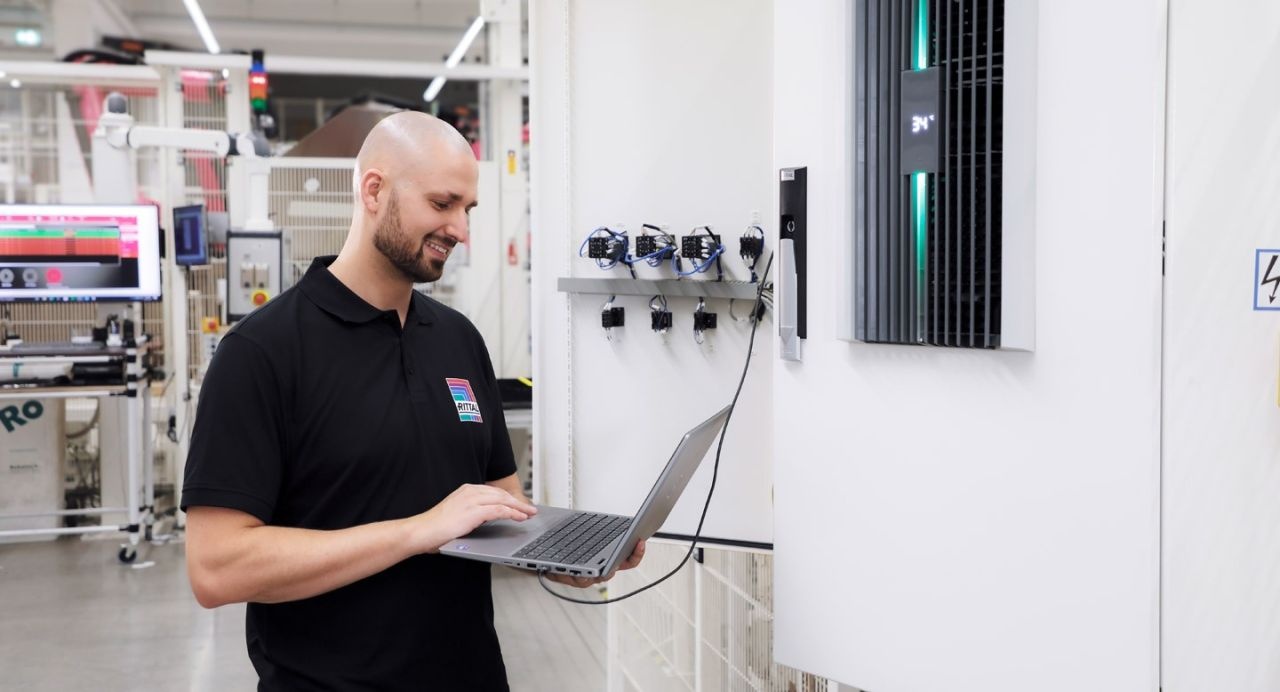
Cooling is often considered too late. In many control cabinets, the main problem is not the enclosure itself, but heat inside the cabinet.
Variable frequency drives, servo drives, power supplies, PLCs and communication devices all generate heat. If the heat is not removed properly, the cabinet may work during testing but fail during summer operation or full-load production.
For lighter heat loads and clean environments, a filter fan can be enough. Suwi offers the Blue e Filter Fan - Industrial Enclosure Cooling Fan for cabinet ventilation.
For higher heat loads, enclosed cooling is often needed. The Blue e Wall-Mounted Cooling Units Top Therm 0.3 - 4 kW is suitable for many industrial control cabinet applications.
If wall space is limited or the cabinet layout requires top-mounted cooling, the Roof-mounted Blue e+ Cooling Unit can be considered.
Cooling should be selected together with the enclosure, not after the cabinet is already built.
Add the busbar system early in the design
For power distribution cabinets, the busbar system should not be decided at the last step.
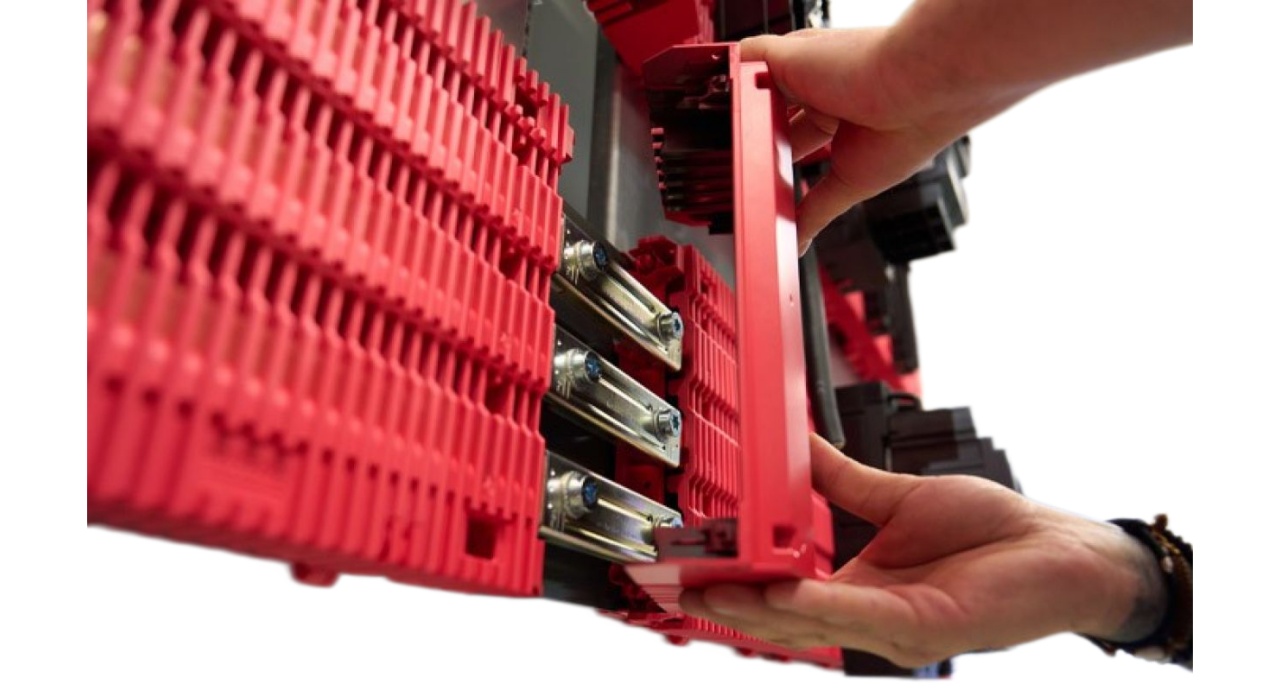
A good busbar layout makes the cabinet cleaner, reduces repeated wiring work and makes later maintenance easier. This is especially useful for panel builders handling repeated projects or system integrators working on multi-cabinet installations.
Instead of only placing cables and breakers inside the cabinet, it is better to plan the enclosure, busbar system and switching components together.
For these applications, customers can review Suwi’s Busbar Systems and Power Distribution categories. For circuit protection and switching, the NH Fuse Switch Disconnectors 160A - 630A can also be part of the cabinet design.
This is important for projects with multiple outgoing circuits, high current distribution or future expansion plans.
What panel builders should care about
Panel builders usually care about build time and repeatability
A cabinet that is easy to mount, modify and wire can save hours in production. Standardized enclosure platforms also make purchasing, stock control and drawing work easier.
For panel builders, the right enclosure should help reduce:
- Extra machining
- Wiring time
- Layout changes
- Installation mistakes
- Non-standard parts
This is why many panel builders prefer standard Rittal enclosure systems through Suwi, especially when they need consistent quality across repeated projects.
What system integrators should care about
System integrators often deal with many brands, many cabinets and changing site conditions. Their main risk is project coordination.
A cabinet that looks acceptable in the drawing may become difficult on site if cable entry, cooling, power distribution and expansion space were not planned clearly.
For system integrators, enclosure selection should include:
- Cabinet layout
- Heat calculation
- Cable routing
- Power distribution
- Busbar space
- Installation method
- Maintenance access
This avoids late-stage changes and helps the project move faster.
FAQ
Q1: What is the best enclosure for a small control panel?
A: For small control panels or machine-side electrical boxes, wall-mounted enclosures such as AE or AX series are usually suitable.
Q2: When should I choose a VX25 baying enclosure system?
A: Choose a VX25 baying enclosure when the project needs multiple cabinets, larger space, expansion options or a structured power distribution layout.
Q3: Do all industrial enclosures need cooling units?
A: No. Some cabinets only need ventilation or filter fans. Cabinets with drives, power supplies or high ambient temperature may need wall-mounted or roof-mounted cooling units.
Q4:Why is a busbar system important in power distribution cabinets?
A: A busbar system helps organize power distribution, reduce wiring complexity and make future maintenance easier.
Q5: Can Suwei help select Rittal enclosure products?
A: Yes. As a Rittal distributor, Suwi can help customers select enclosures, cooling products, busbar systems and power distribution components based on project requirements.