An industrial enclosure cooling system is the engineered combination of cabinet cooling hardware, airflow paths, sensors, control logic, and maintenance rules used to keep PLC cabinets, drive cabinets, and electrical enclosures within a defined thermal operating range. In automotive manufacturing, this system protects control electronics in welding lines, paint shop conveyors, robotic stations, EV assembly cells, and final assembly equipment, where thermal load changes with production state and ambient exposure.
Why Industrial Enclosure Cooling System Failures Occur
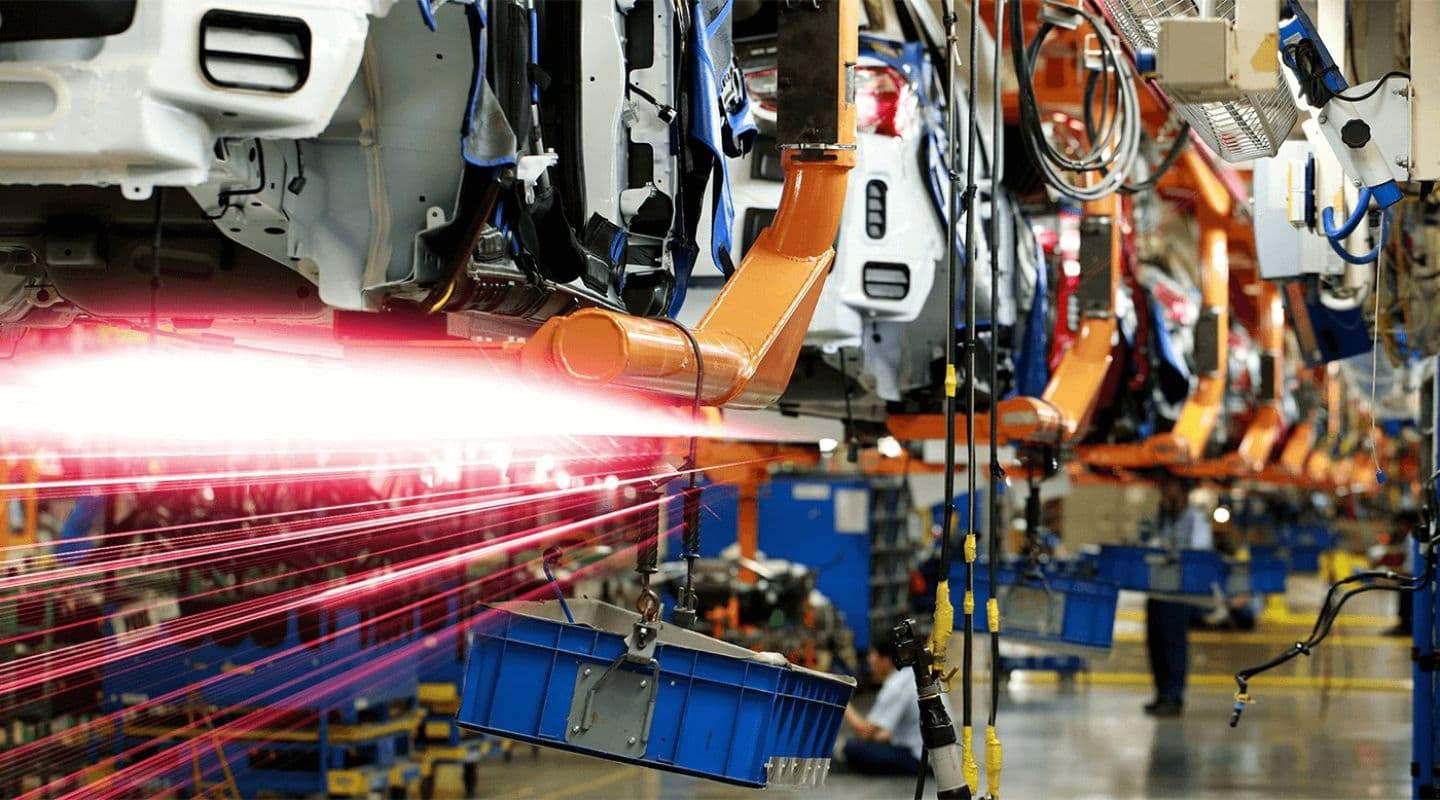
An industrial enclosure cooling system usually fails through gradual performance degradation before a visible cooling fault occurs. In automotive plants, the root cause is often filter contamination, airflow restriction, heat exchanger fouling, cabinet sealing leakage, increased component density, or poor sensor placement rather than a complete fan or compressor failure.
An industrial enclosure cooling system failure path should be analyzed as a chain: higher thermal load or reduced cooling capacity causes rising internal temperature; rising temperature increases component stress; component stress causes derating, nuisance alarms, or PLC cabinet overheating; the system impact is lower MTBF, unstable control loops, and unplanned downtime. This is why automotive automation planning should connect cabinet design with automotive industry production requirements instead of treating cooling as a late-stage accessory.
An industrial enclosure cooling system can be modeled with a basic heat balance:
Q_total = ΣQ_component + Q_ambient_gain - Q_removed
An industrial enclosure cooling system must remove heat generated by PLCs, VFDs, servo drives, power supplies, Ethernet switches, relays, and I/O modules while also rejecting heat entering from welding areas, paint shop ovens, or high-temperature process zones. When Q_removed falls below the real thermal load, cabinet temperature rises.
An industrial enclosure cooling system also follows a temperature rise model:
Cth x dT/dt = Q_generated - Q_removed
An industrial enclosure cooling system becomes unstable when dT/dt remains positive during repeated production cycles. In a welding PLC cabinet, robot duty cycle and fixture actuation may create repeated heat peaks; if the cooling loop reacts late, those peaks become cumulative thermal stress.
An industrial enclosure cooling system should be checked through thermal resistance:
Rth = (T_internal - T_ambient) / Q_load
An industrial enclosure cooling system with rising Rth is losing heat rejection capability under the same load condition. This often appears as intermittent PLC cabinet overheating, communication errors, drive alarms, or power supply instability before a hard temperature alarm occurs; related cabinet protection logic belongs in the broader climate control category.
An industrial enclosure cooling system is highly sensitive to airflow degradation because heat removal depends on air volume and temperature difference:
Q_air = rho x Cp x V_air x Delta T
An industrial enclosure cooling system with a 20% airflow loss may still operate, but the cooling reserve is reduced. Filter blockage, fan wear, cable obstruction, and poor internal air routing can therefore create hidden hot spots in PLC racks, drive stacks, and power supply zones.
An industrial enclosure cooling system can also fail analytically when sensor placement is wrong. A sensor mounted near the cabinet door may report acceptable temperature while upper PLC modules or VFD zones operate at a higher local temperature, resulting in undetected derating and reduced MTBF.
An industrial enclosure cooling system that relies only on delayed threshold control can miss the real failure mechanism. Thermal systems have inertia, so by the time a fixed alarm point is reached, the cabinet may already have experienced repeated component stress and derating curve exposure.
In an automotive welding area, one PLC cabinet showed repeated communication alarms during high-duty robot cycles. The cooling unit was still running, so the issue was not treated as a cooling failure at first.
Inspection showed clogged filters, reduced airflow, and a local hot spot near the PLC power supply zone. The failure path was:
Welding dust -> airflow degradation -> Delta T rise -> component derating -> PLC cabinet overheating
The maintenance engineer reported that the first symptoms were drive warnings and network instability, not a cooling alarm. This case shows why an industrial enclosure cooling system must be monitored by thermal performance, not only by whether the fan is running.
How Industrial Enclosure Cooling Systems Work
An industrial enclosure cooling system works by balancing generated heat, ambient heat gain, airflow, heat exchange, and control response. The engineering objective is not simply lower cabinet temperature; the objective is stable thermal margin under changing production load.
An industrial enclosure cooling system in automotive manufacturing must support dynamic thermal load management. A welding cabinet may peak during robot welding cycles, a paint shop drive cabinet may heat during conveyor acceleration, and a PLC cabinet may remain energized continuously even when mechanical motion is paused.
An industrial enclosure cooling system should measure more than one cabinet temperature value. Useful signals include internal cabinet temperature, ambient temperature, airflow, fan speed, cooling power, door status, humidity, filter condition, PLC state, VFD current, and production cycle data.
An industrial enclosure cooling system should calculate thermal load index, cooling performance ratio, Delta T drift, and cooling effectiveness. These values help engineers determine whether control cabinet thermal management requires airflow correction, component relocation, maintenance, or cooling capacity review.
An industrial enclosure cooling system can use these performance indicators:
TLI = Q_load / Q_cooling_available
CPR = Q_removed_actual / Q_removed_nominal
Thermal Margin = T_limit - T_predicted
Cooling Effectiveness = Delta T_controlled / P_cooling
An industrial enclosure cooling system becomes easier to diagnose when measured thermal behavior is compared with production state. If a paint shop PLC cabinet becomes hotter under the same load and ambient condition, the likely causes are airflow degradation, cooling efficiency loss, enclosure leakage, or cabinet layout change.
An industrial enclosure cooling system should also support product-level decisions where cooling capacity is part of the cabinet design. For example, wall-mounted cooling units may be evaluated when cabinet heat load exceeds the available thermal margin, while fans, filter fans, and air/air heat exchangers may fit lower-load enclosure climate control system designs.
An industrial enclosure cooling system should connect reliability cost with thermal performance. A 10-25% cooling efficiency degradation can reduce thermal margin enough to increase nuisance faults, accelerate electronic aging, and increase predictive maintenance HVAC workload.
Predictive Thermal Control Architecture for Industrial Enclosure Cooling System Reliability
An industrial enclosure cooling system should be designed as a closed-loop control architecture:
sensor -> edge controller -> PLC -> cooling actuator -> feedback
An industrial enclosure cooling system uses sensors to collect cabinet and process data, an edge controller to calculate thermal indicators, the PLC to integrate machine state, the cooling actuator to adjust fan speed or cooling output, and feedback to confirm whether the cabinet response matches the expected thermal model.
An industrial enclosure cooling system using threshold control follows the old method:
If T_internal > setpoint, increase cooling.
If T_internal < setpoint, reduce cooling.
An industrial enclosure cooling system using threshold control is acceptable only as basic overtemperature protection. It is weak for automotive manufacturing because it reacts late and does not identify airflow degradation, sensor placement error, hidden hot spots, or early PLC cabinet overheating.
An industrial enclosure cooling system using predictive control is the practical new method. It evaluates dT/dt, production load, ambient temperature, airflow trend, and cooling power to identify abnormal thermal behavior before a high-temperature alarm occurs.
An industrial enclosure cooling system can apply predictive logic such as:
If dT/dt increases faster than expected
and production load is unchanged
and cooling power increases
then classify as cooling performance degradation.
An industrial enclosure cooling system using model-based control is the advanced method for high-criticality automotive cabinets. Model predictive control, or MPC, estimates future cabinet temperature from current cabinet conditions, production state, airflow, and cooling capacity.
An industrial enclosure cooling system model can be written as:
T_future = f(T_internal, T_ambient, Q_load, airflow, cooling_state, production_state)
An industrial enclosure cooling system should use thermal profiling, anomaly detection, and load-state mapping. Thermal profiling defines expected temperature behavior, anomaly detection identifies deviation from expected behavior, and load-state mapping connects PLC or VFD activity to heat generation.
An industrial enclosure cooling system becomes stronger when IIoT monitoring connects cabinet data with maintenance planning. For this layer, monitoring solutions can support visibility into physical operating conditions, while energy monitoring can help compare cooling demand with production state and electrical load.
An industrial enclosure cooling system should classify whether temperature rise is caused by increased production load, airflow degradation, cooling capacity loss, cabinet door leakage, sensor error, or abnormal ambient exposure. This classification is the basis for predictive maintenance HVAC workflows.
Engineering Decision Rules for Industrial Enclosure Cooling System Maintenance
An industrial enclosure cooling system should be maintained using measurable engineering thresholds instead of calendar inspection alone. Decision rules convert thermal data into clear maintenance, redesign, or upgrade actions.
| Industrial Enclosure Cooling System Metric |
Threshold |
Engineering Action |
Thermal Load Index, TLI = Q_load / Q_cooling_available |
TLI > 0.85 |
Cooling upgrade, airflow redesign, or cabinet load reduction required |
Cooling Performance Ratio, CPR = Q_removed_actual / Q_removed_nominal |
CPR < 0.8 |
Maintenance required; inspect filters, fans, heat exchanger, sealing, and cooling unit performance |
| Delta T Drift |
Delta T drift > 15% |
Inspection required; compare sensor placement, airflow path, load state, and local hot spot conditions |
| Thermal Margin |
< 10°C to component limit |
Risk review required; check derating curves and production criticality |
| Cooling Efficiency Degradation |
> 20% from baseline |
Predictive maintenance HVAC action required |
| Repeated PLC Cabinet Overheating |
2+ events per production period |
Root-cause analysis required; do not treat as an isolated alarm |
An industrial enclosure cooling system with TLI > 0.85 has low cooling reserve. In automotive welding or paint shop applications, this condition should trigger engineering review because production peaks can push the cabinet into thermal instability.
An industrial enclosure cooling system with CPR < 0.8 delivers less than 80% of expected heat removal. This is a maintenance condition even if no hard fault is present, because hidden cooling degradation directly affects MTBF.
An industrial enclosure cooling system with Delta T drift > 15% means the same or similar production load now produces a higher temperature rise. This is a strong indicator of airflow restriction, cabinet modification, sensor error, or cooling performance loss.
An industrial enclosure cooling system should be evaluated with an old vs new vs advanced control model:
| Control Method |
Role |
Limitation |
Automotive Manufacturing Fit |
| Threshold control |
Basic overtemperature protection |
Reacts late and misses hidden degradation |
Backup protection only |
| Predictive control |
Detects drift before alarm |
Requires reliable sensor and load-state data |
Best fit for most automotive cabinets |
| Model-based control / MPC |
Predicts future thermal behavior |
Requires modeling and integration effort |
Best fit for critical welding, paint shop, and high-density PLC cabinets |
An industrial enclosure cooling system in automotive manufacturing should not rely on threshold control alone. Predictive control is the correct default for most PLC cabinets because it detects airflow degradation, cooling efficiency loss, and PLC cabinet overheating risk before production stops.
An industrial enclosure cooling system should also feed design learning back into cabinet engineering. For method-level improvement, Rittal automation systems and software-supported planning can help connect enclosure layout, component density, thermal load management, and maintenance strategy.
An industrial enclosure cooling system should not be improved only by oversizing hardware. Larger cooling capacity may add reserve, but it does not solve sensor placement error, blocked airflow, uneven thermal load management, or delayed control response.
An industrial enclosure cooling system must be specified, monitored, and maintained as a reliability control loop. In automotive manufacturing, the correct decision model is measurable thermal margin, predictive maintenance HVAC logic, controlled Delta T drift, improved MTBF, and early prevention of PLC cabinet overheating.