Engineering Errors That Cause Electrical Cabinet Overheating, Equipment Failure, and Unplanned Downtime
Selecting a cooling device is only one part of cabinet thermal management. A correctly specified filter fan, heat exchanger, or enclosure air conditioner can still deliver poor results if the heat load is wrong, the airflow path is obstructed, or the surrounding environment was not considered during design.
Many common cabinet cooling mistakes begin before the cooling equipment is ordered. Engineers may underestimate component losses, select a technology that is incompatible with dusty or hot ambient air, or treat the manufacturer's nominal cooling capacity as the capacity available under every operating condition. These electrical enclosure cooling mistakes, combined with installation and maintenance errors, create electrical cabinet cooling problems that can be difficult to diagnose after commissioning.
The result is rarely limited to a warm enclosure. Persistent high temperature can accelerate electronic component aging, cause drives and power supplies to derate, trigger nuisance trips, corrupt process reliability, and increase unplanned maintenance. This article builds on Why Cabinet Cooling Has Become a Critical Engineering Decision and Understanding Heat Generation Inside Electrical Cabinets by focusing on the design and operating errors that turn manageable heat into a reliability problem.
1. Incorrect Cabinet Heat Load Calculation
Heat-load calculation is the foundation of any defensible cooling design. The required cooling capacity depends on the heat released inside the enclosure, heat transferred through the cabinet surfaces, ambient conditions, solar loading where applicable, and the maximum allowable internal temperature. If these inputs are incomplete, the apparent precision of the final cooling-unit selection is misleading.
A common error is to count only the most obvious heat sources, such as a large variable frequency drive (VFD) or transformer. Smaller devices are often omitted: PLC racks, I/O modules, industrial power supplies, servo amplifiers, managed switches, safety controllers, contactors, HMIs, industrial PCs, and UPS systems. Individually, their losses may appear minor; in a dense cabinet, the combined load can consume a substantial part of the cooling margin.
Do not use equipment nameplate power as though it were heat dissipation. What matters is the component's power loss under the relevant duty cycle. For a drive, that means evaluating efficiency and operating load rather than assigning the full motor rating as cabinet heat. Conversely, using an unrealistically light average load can understate the heat produced during sustained high-output operation.
Another mistake is relying on rules of thumb without validating the finished machine. Engineering estimates are appropriate during concept development, but commissioning should include temperature measurements under representative production conditions. Record ambient temperature, cabinet inlet and outlet air temperatures, internal temperatures near critical devices, and machine operating state. Temporary data logging is much more useful than a single handheld reading taken with the enclosure door open.
For a structured calculation method and the data required from component suppliers, see Cabinet Heat Load Calculation Guide.
2. Selecting the Wrong Cooling Method
Cooling technologies are not interchangeable. The correct choice depends on heat load, required internal temperature, ambient temperature, enclosure protection needs, available installation space, and lifecycle constraints.
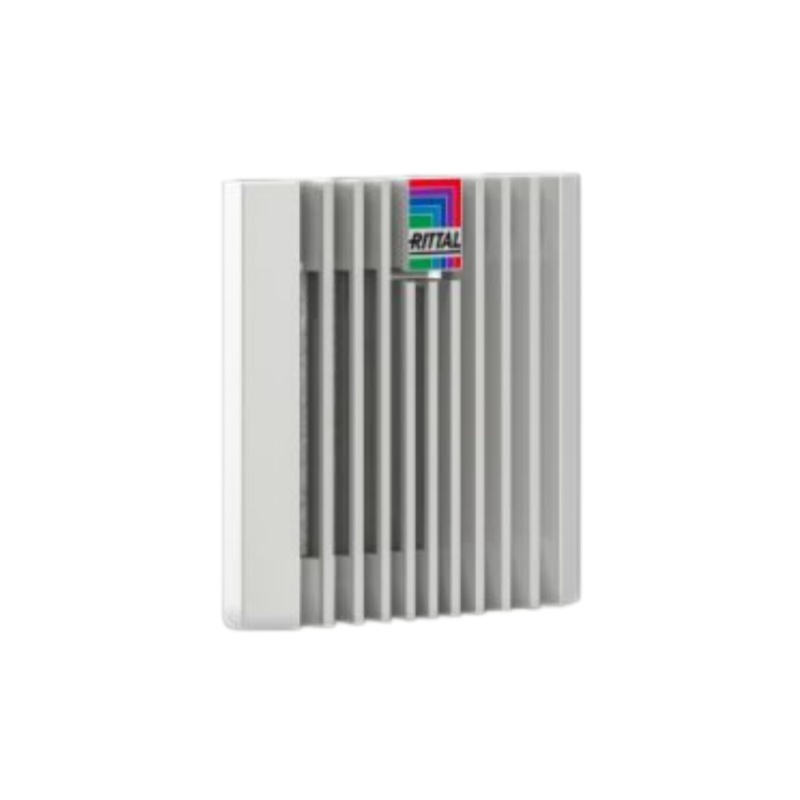
Filter fans are efficient and economical when ambient air is cool and sufficiently clean. They remove heat by exchanging cabinet air with the surrounding air, so they cannot cool the enclosure below ambient temperature. Their performance also falls as filters become loaded or airflow meets resistance from crowded components and poorly sized outlet filters.
Air-to-air heat exchangers keep internal and external air circuits separate, helping preserve enclosure protection against dust and contaminants. They are useful when ambient air is cooler than the desired cabinet temperature, but their heat-transfer capability declines as the temperature difference narrows. Specifying one where ambient temperature can approach or exceed the internal setpoint leaves little or no usable cooling potential.
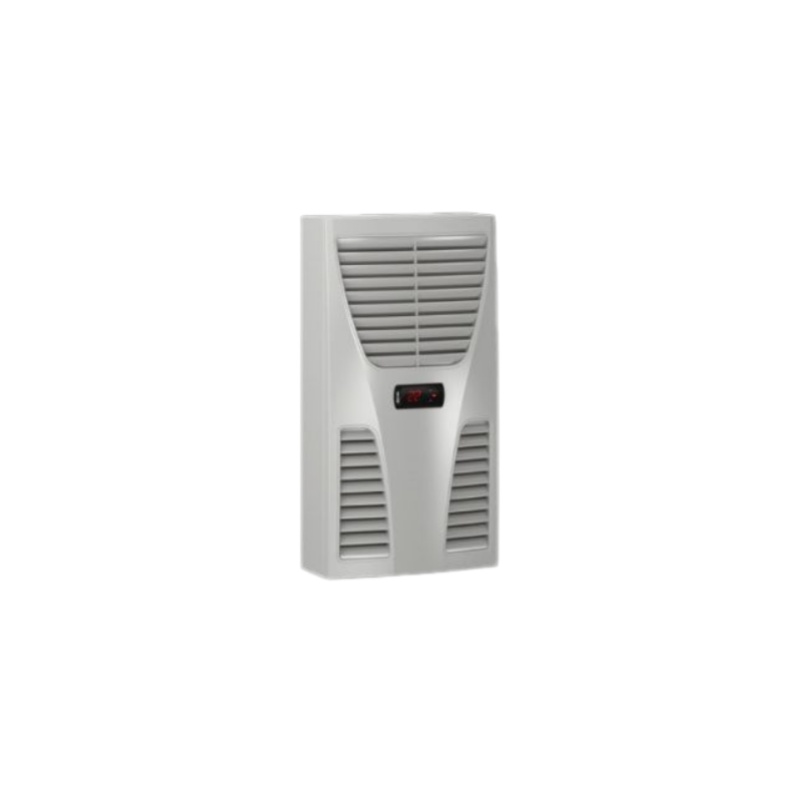
Enclosure air conditioners can cool below ambient temperature and are appropriate for higher heat loads or hot industrial spaces. However, refrigeration adds energy consumption, condensate considerations, and maintenance requirements. A low-load cabinet in a clean, cool plant may not need compressor-based cooling. At the other extreme, a high-density drive cabinet may exceed the capability of ventilation even when the plant feels comfortable at operator level.
Advanced options—including variable-speed, hybrid, and connected cooling systems—can improve part-load efficiency and diagnostics, but they do not correct an inaccurate thermal model or poor installation. Start with the application, not the technology label. A useful comparison framework is provided in Choosing the Right Cabinet Cooling Method, with more detailed comparisons in Filter Fan vs Enclosure Air Conditioner and Air-to-Air Heat Exchanger Guide.
3. Ignoring Environmental Conditions
An enclosure cooling system interacts continuously with its surroundings. A solution that performs well in a clean assembly area may fail quickly beside a machining center, welding cell, washdown line, or outdoor process skid.
Dust and fibers clog filter media and heat-transfer surfaces, reducing airflow and increasing fan load. Oil mist can form a sticky layer on filters and condenser coils, causing contamination to accumulate faster than visual inspection suggests. In these environments, an open-loop fan system may also carry contaminants directly into the cabinet and deposit them on electronics.
High ambient temperature reduces the temperature difference available to ventilation and air-to-air heat exchangers. It also changes the effective capacity of an enclosure air conditioner. Selection must therefore be based on rated performance at the expected operating point—not only on a headline capacity measured under different conditions.
Humidity creates a different risk. Cooling an enclosure below the air's dew point can produce condensation on internal surfaces or cold components. Door openings, cable-entry leaks, and poorly sealed mounting cutouts can introduce humid air even when the main enclosure has a high protection rating. Temperature setpoints should provide adequate control without unnecessary overcooling, and condensate handling must suit the installation.
Outdoor cabinets require additional checks for solar radiation, rain, wind-driven dust, corrosion, seasonal temperature range, UV exposure, and low-temperature operation. A cooling unit approved only for protected indoor use should not be assumed suitable outdoors. See Outdoor Electrical Cabinet Cooling for the additional design inputs required in exposed installations.
4. Poor Airflow Design Inside the Cabinet
Cabinet temperature is not uniform. A sensor showing an acceptable average temperature can hide a severe hot spot behind a VFD, above a power supply, or inside a tightly packed equipment zone.
Air must have a defined path from supply to return. Cable ducts, wire bundles, mounting plates, shelves, and densely installed modules can create short circuits in that path: cooled air returns to the cooling unit without reaching the heat-producing components. Recirculating hot discharge air through a device produces the opposite problem and can cause local derating even when total cooling capacity is adequate.
Component arrangement should support the thermal design. Place heat-sensitive PLCs, communication equipment, and control electronics away from concentrated heat sources where practical. Maintain the clearances specified by device manufacturers, especially above and below VFDs and servo drives. Do not place a major heat source directly in the cold-air discharge path if its hot exhaust will then flow across sensitive electronics.
Separate high-loss equipment into another enclosure or thermal zone when density makes reliable airflow impossible. Route cables so they do not block fan intakes, cooling-unit outlets, or vertical convection paths. After assembly, use multiple temperature sensors or thermal imaging under load to confirm that the physical cabinet matches the assumed airflow model.
5. Oversizing or Undersizing Cooling Capacity
Undersizing is the more obvious error. When cooling capacity is lower than the actual heat gain at the design condition, cabinet temperature rises until equipment derates, alarms, or fails. Even if the system survives normal operation, it may have no reserve for a dirty filter, a higher summer ambient temperature, or a later controls upgrade.
Oversizing is not a harmless solution. A refrigeration unit that is much larger than the load may cycle frequently instead of operating steadily. Short cycling can increase component wear, reduce temperature stability, and create inefficient operation. The larger unit also raises purchase cost, electrical infrastructure requirements, space consumption, and ongoing energy use. Excessive cooling or an unnecessarily low setpoint may increase condensation risk.
Capacity should be selected at the actual design point with a justified engineering margin. Include credible worst-case ambient temperature, maximum simultaneous equipment load, surface heat transfer, enclosure arrangement, and expected fouling between maintenance intervals. Avoid adding arbitrary safety factors to already conservative inputs; stacked margins often lead directly to oversizing.
Also consider future modifications explicitly. If spare capacity is needed for a planned drive or PC, document the anticipated additional watts. "Future expansion" without a defined load is not a sizing criterion.
6. Ignoring Maintenance Requirements
Cooling performance degrades between the day of commissioning and the next service intervention. A design that works only with a perfectly clean filter has no practical operating margin.
Filter inspection frequency should reflect contaminant loading, not a generic calendar interval. Differential pressure, airflow, or temperature trends can provide better evidence than visual inspection alone. Replacement filters must have the correct type and airflow characteristics; substituting denser media may protect against finer dust while restricting flow beyond the fan's available static pressure.
Condenser coils and external heat-transfer surfaces need access for cleaning. If a wall-mounted cooling unit is installed against a structure or in a narrow aisle, routine service may become difficult enough that it is postponed. Fans, seals, condensate drains, and alarms also require inspection. A fan can rotate while delivering inadequate flow because of contamination, damage, or an obstructed path.
Temperature monitoring should identify degradation before an overtemperature trip stops production. Trend internal temperature against ambient temperature and machine load. A gradual rise in the cabinet-to-ambient temperature difference at similar load can indicate reduced airflow or heat-transfer performance. Connect alarm outputs to the PLC, SCADA, or maintenance system where the operational risk justifies it, and define who responds to the alarm.
7. Treating Cabinet Cooling as an Isolated Component Decision
The cooling unit cannot compensate indefinitely for weaknesses elsewhere in the enclosure design. Reliable control cabinet temperature management is a system-level discipline that combines enclosure selection, component layout, heat-load calculation, cooling method, installation details, controls, and maintenance.
Enclosure material, dimensions, surface area, location, and protection category affect heat transfer. Component spacing determines whether air reaches critical zones. Mounting cutouts and cable entries influence sealing. Thermostat or controller settings determine cycling behavior and energy consumption. Monitoring and maintenance determine whether the original performance remains available after months of operation.
Design reviews should therefore treat cabinet thermal management as an interface between electrical, mechanical, controls, and maintenance teams. Record the calculation assumptions and setpoints in the machine documentation. During change control, reassess the thermal design whenever components, enclosure location, production duty, or environmental conditions change. Adding a power supply or replacing a drive with a larger model is also a thermal modification.
How to Avoid Common Cabinet Cooling Mistakes
Use this checklist during design review and commissioning:
- Calculate the actual heat load.Sum component power losses at realistic duty, include all secondary devices, and account for heat transfer through enclosure surfaces.
- Evaluate the installation environment.Document ambient temperature range, dust, oil mist, humidity, washdown exposure, solar load, altitude where relevant, and indoor or outdoor certification requirements.
- Select suitable cooling technology.Confirm that the method can achieve the target internal temperature while maintaining the required enclosure protection.
- Verify capacity at the design point.Use performance data for the expected ambient and internal temperatures, then apply a documented margin for credible variation and fouling.
- Verify airflow design.Maintain device clearances, separate major heat sources, keep supply and return paths open, and check for hot-air recirculation.
- Validate under representative load.Test with doors closed and the machine operating through its demanding production states; log temperatures at multiple internal locations.
- Monitor cabinet temperature. Set actionable warning and alarm thresholds, trend performance, and route critical alarms to the appropriate control or maintenance system.
- Plan maintenance requirements. Provide service access and define inspection or cleaning intervals based on the real environment.
- Reassess after modifications.Repeat the heat-load and airflow review when equipment, duty cycle, location, or enclosure configuration changes.
Conclusion
The most damaging common cabinet cooling mistakes are rarely caused by a single defective device. They develop when calculation, technology selection, physical layout, environmental protection, monitoring, and maintenance are handled as separate decisions. The resulting industrial cabinet overheating may appear first as intermittent drive trips or unstable electronics, but its long-term effects include shorter component life, repeated service work, and lost production.
Reliable industrial automation cabinet cooling requires a complete thermal management strategy: quantify the heat, define the environment, select capacity at the real operating point, provide an effective airflow path, validate the finished cabinet, and preserve performance through monitoring and maintenance.
For applications with variable heat loads, high energy costs, or a need for connected diagnostics, Blue e+ Cooling Technology is one advanced option worth evaluating. Its suitability still depends on the same engineering fundamentals. No cooling technology can replace accurate inputs and a cabinet designed as a thermal system.